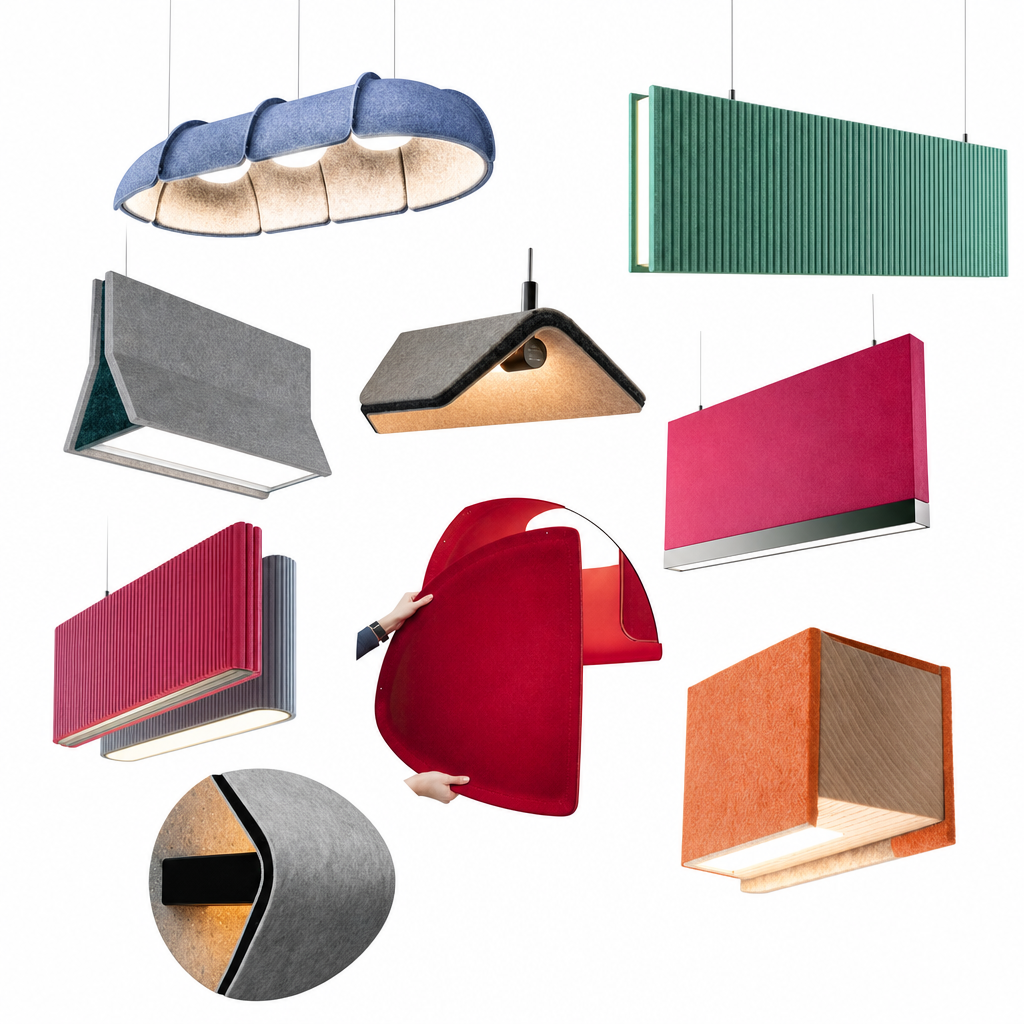
integrated acoustic art lighting fixtures: Core Design Philosophy For Interior Fit‑Out
Traditional ceiling lighting and sound‑absorbing components are usually purchased and installed as separate building elements. Designers need to coordinate two different product sets to handle illumination and reverberation separately.
integrated acoustic art lighting fixtures combine lighting function and sound‑absorbing capacity within one finished unit. This eliminates redundant hardware and streamlines the overall interior layout for modern fit‑out projects.
These hybrid units target public‑access spaces that demand both pleasant ambient light and controlled acoustic conditions. Common project contexts include university buildings, open‑plan offices, cultural centres and multi‑function lobbies.
Basic interior acoustic planning guidance can be reviewed via ISO 17971 standard documentation, which addresses aesthetic‑focused sound‑absorbing component deployment indoors.
integrated acoustic art lighting fixtures: Main Product Traits From Manufacture Specifications
integrated acoustic art lighting fixtures adopt fabric‑based absorbing layers paired with built‑in light modules. Most finished units are built for ceiling suspension, matching typical overhead mounting conditions in large indoor venues.
Visible outer shapes follow streamlined, curved and elongated silhouettes. Visual styling is prioritized so each fixture acts as part of interior decoration rather than purely functional background hardware.
Base materials follow mainstream public building requirements. Raw components satisfy E1‑level indoor environmental standards and meet B1 fire‑resistance classification for heavy‑traffic occupied spaces.
Different surface colour options support custom matching to existing interior colour schemes. Project teams can select tones that blend subtly or create bold visual focal points depending on design intent.
integrated acoustic art lighting fixtures: Compatible Matching With Other Acoustic Product Lines
integrated acoustic art lighting fixtures seldom work in complete isolation within real‑world construction projects. They are often combined with other acoustic series to complete full‑range room acoustic treatment.
When installed in university multi‑function halls, these lighting units can pair with acoustic art installation modules. Together they enrich ceiling visual layers while jointly reducing unwanted room reverberation.
For open‑plan office environments, specifiers often combine them with movable sound‑proof screen partitions. Lighting handles overhead sound reflection, while partitions divide space and control local noise reflection.
They can also coordinate with wall‑mounted acoustic panels in media labs and lecture venues. This mixed‑product approach balances ceiling‑based absorption with wall‑side sound‑energy handling.
Reference case studies of mixed‑product acoustic fit‑outs are available within peer‑reviewed built‑environment research articles for further designer reference.
integrated acoustic art lighting fixtures: Typical Real‑World Venue Deployment Scenarios
integrated acoustic art lighting fixtures deliver clear practical value across many categories of commercial and public interior fit‑out assignments.
Within higher‑education facilities such as journalism‑focused university multi‑purpose halls, suspended units improve acoustic comfort for seminars, rehearsals and student‑led presentations. Soft ambient light supports recording and on‑site shooting activities.
In open‑plan corporate offices, these fixtures reduce harsh sound reflection across large work zones. Staff experience less speech echo during daily teamwork, while built‑in lighting provides comfortable general workspace illumination.
Cultural‑sector buildings including museum foyers and exhibition lobbies benefit greatly. The dual‑purpose hardware maintains pleasant visitor‑facing aesthetics and suppresses noisy reverberation from large crowds of moving guests.
Co‑working spaces and shared community activity rooms represent another suitable application field. Flexible mixed‑use rooms gain both lighting infrastructure and basic acoustic improvement from these suspended units.
Field‑proven installation advice for suspended acoustic hardware can be found at professional acoustic engineering resource pages.
integrated acoustic art lighting fixtures: Notable Benefits Against Separate Component Solutions
integrated acoustic art lighting fixtures bring several measurable advantages compared to buying standalone lamps plus independent ceiling sound absorbers.
First, site construction workflows become more efficient. Installation crews complete suspension mounting for lighting and acoustic parts in one single procedure, cutting total working hours on‑site.
Second, overhead ceiling space usage becomes more rational. There is no need to reserve separate installation zones for lamps and for sound‑absorbing modules, simplifying ceiling truss load‑planning work.
Third, interior visual consistency is easier to achieve. Designers avoid mismatched appearances between independently‑sourced lamps and acoustic absorbers from different product suppliers.
Fourth, procurement and project coordination workload reduces. Specifiers manage fewer part numbers and fewer vendor interfaces when selecting these combined‑function finished fixtures for fit‑out contracts.
integrated acoustic art lighting fixtures: Key Practical Recommendations For Specifiers
When planning projects that will adopt integrated acoustic art lighting fixtures, design teams should follow several simple but effective practical guidelines.
Carry out fixture selection work in the early schematic‑design phase. Adding these suspended units as a last‑minute modification will limit layout possibilities and may create extra engineering costs.
Verify ceiling hanging load capacity before ordering. Suspended hardware places real weight upon overhead trusses, and building structures must be able to safely sustain long‑term fixture loads.
Never expect these lighting‑style fixtures to solve every acoustic challenge alone. For spaces with strict reverberation targets, supplement with wall‑side acoustic materials to reach full design performance benchmarks.
Match colour and silhouette choices to overall interior themes. Take existing wall finishes, partition tones and ceiling textures into account so fixtures fit naturally into the completed visual environment.
Double‑check material certification documentation before delivery. Confirm environmental and fire‑safety test reports, especially for projects situated in heavily‑visited public‑access building premises.
Modern public interior projects demand multi‑purpose building hardware that merges practical performance with visual attractiveness. integrated acoustic art lighting fixtures represent one mature solution to satisfy this growing market requirement.
By applying these suspended dual‑function units alongside complementary acoustic product ranges, architects and fit‑out specialists can deliver interiors with good lighting quality, controlled reverberation and cohesive artistic interior styling for education, corporate and cultural‑sector end users.